I build
I'm drawn to problems where being right matters: a near-miss at an intersection, a finding on a chest X-ray, a ticket someone's been waiting on since morning. I'm a data scientist and ML engineer with two years shipping production ML at HCL Technologies, a paper at DEXA in Naples, and a habit of building things nobody asked me to. Now an MS in Data Science at the University of Arizona, and Research & Development at Biosphere 2.
Most of what I've learned sits in the gap between a model that works in a notebook and one people depend on every day. I spent two years at HCL Technologies in that gap, building Gen AI copilots that read across 4,000+ enterprise documents and cost models that run as a weekly job on Azure, all of it behind Docker and CI/CD, because a model nobody can deploy isn't finished. Before that came Carrier and PwC, where I shipped an FAQ bot that took roughly a third of the load off a support inbox and a Neo4j graph untangling how cloud-native projects depend on one another.
I'm midway through an MS in Data Science at the University of Arizona (2025–2027, GPA 3.83), after a B.Tech in Computer Science from Shiv Nadar University and a paper at DEXA 2024 in Naples. The projects I pick up on my own keep circling the same territory, traffic footage and chest X-rays, where a missed call carries a cost and getting the evaluation honest matters more than the leaderboard.


Tiered Minute Reduction (TMR) Forecasting

GreenThumb Cloud Control System, Freight Farms

Computational Modeling in Cognitive Science

Generative AI Development Team

Sales KPP Enterprise Application


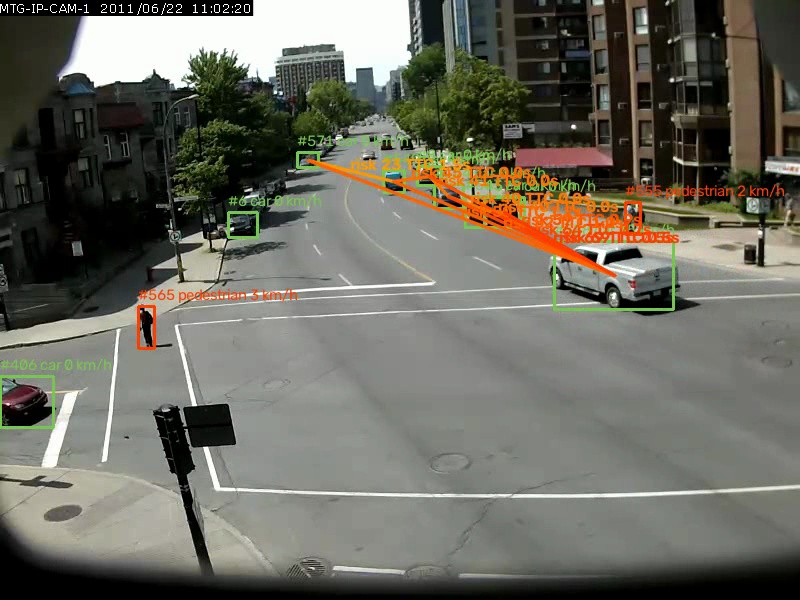
94.4% vehicle detection F1, validated against the Urban Tracker benchmark
Scans traffic video and flags dangerous close calls between cars, cyclists, and pedestrians. Uses YOLO11, ByteTrack, and OpenCV to detect and track road users, flags near misses at 87.6% precision against hand labeled events, and is optimized with TensorRT to cut processing time 3.8x (12→46 fps) for live feeds. Ships a dashboard that replays flagged events and maps where close calls cluster to reveal a city's riskiest intersections.
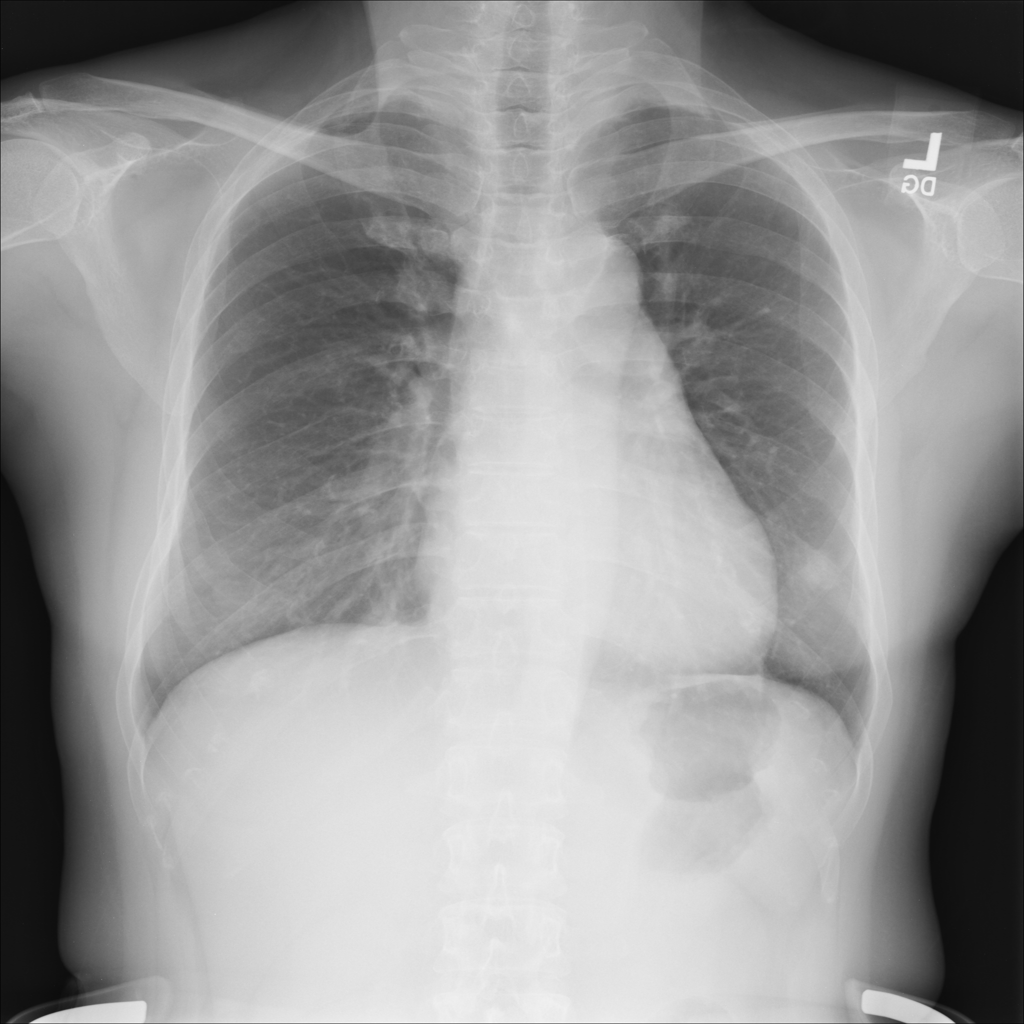
0.84 mean AUROC across 14 thoracic pathologies — a 6 point gain over baseline
Deep learning triage system for chest X-rays, built on NIH ChestX-ray14 (112,000+ images, 30,000 patients). Trains DenseNet-121 and ConvNeXt with PyTorch Lightning under strict patient-level splits, reaching 0.84 mean AUROC across 60+ Weights & Biases experiments. Grad-CAM localization validated against 880 ground truth bounding boxes, with a test suite prioritizing serious findings over raw accuracy to keep missed diagnoses under 8%. Deployed via ONNX export for 4x faster CPU inference (~120 ms/image), serving a Gradio app on Cloud Run with GitHub Actions CI/CD and Prometheus metrics.
84.7% mIoU on LIP — 2.3% above the published SCHP baseline
Benchmarked the SCHP human parsing model against state-of-the-art methods across Look into Person (LIP), Active Template Regression, and Pascal Part, addressing label noise challenges.
Peer-reviewed paper (co-authored) presented at the 35th International Conference on Database and Expert Systems Applications, published in the Springer LNCS series.